Brass terminals for sockets & power strips
The parts that clamp a wire and carry the current — stamped and formed from brass strip, then supplied loose in bags and cartons, or still on the carrier strip where your line feeds them automatically.
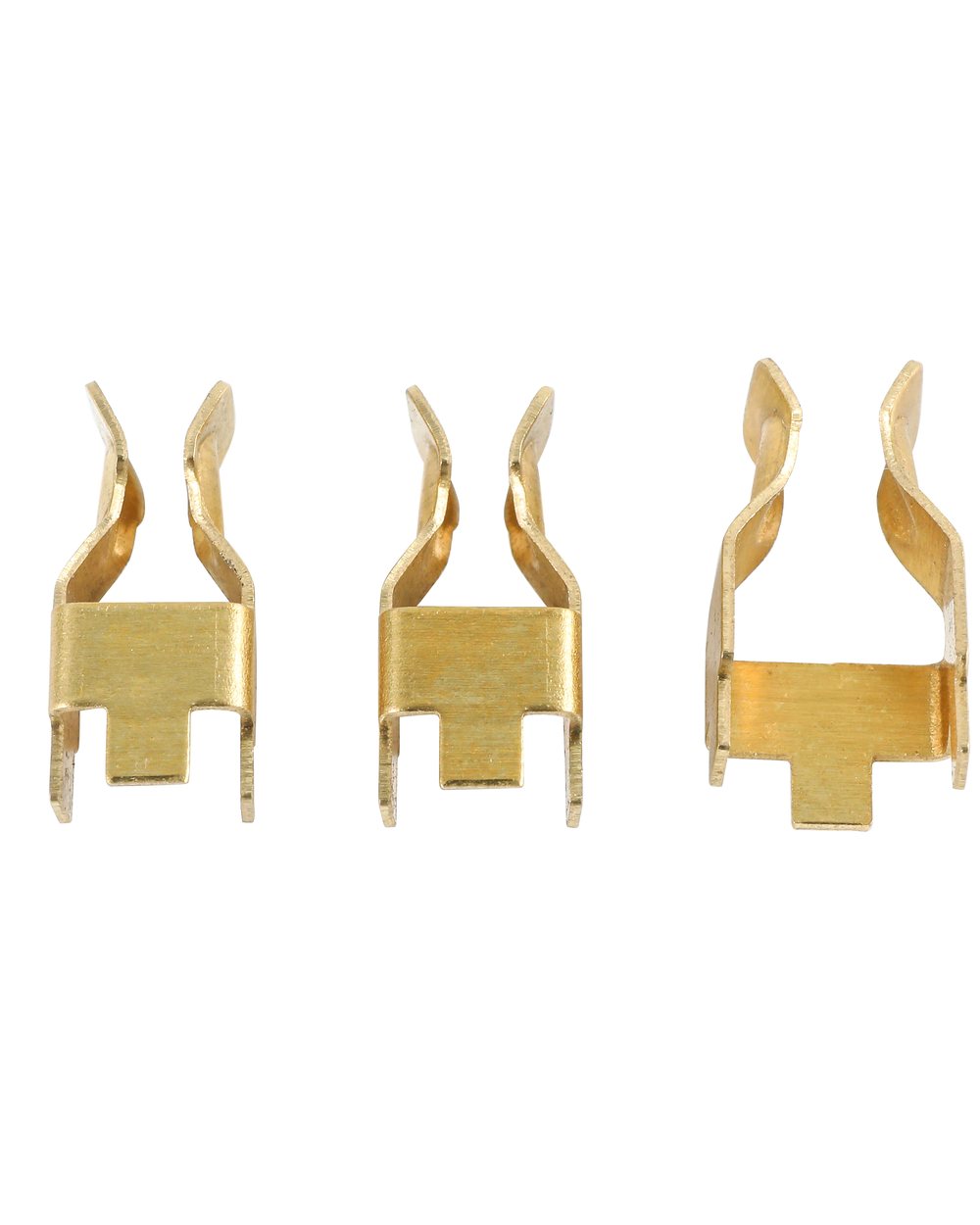
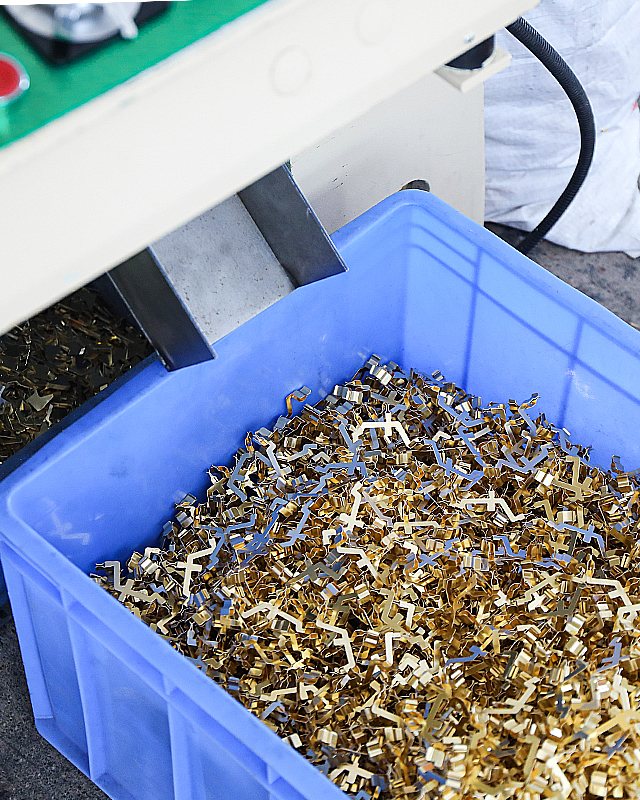
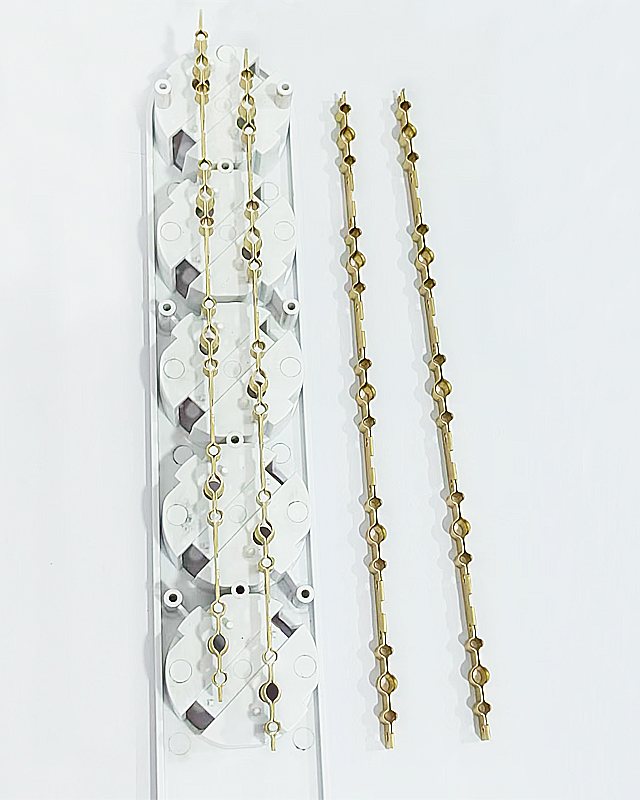
What we stamp
Terminal types
A terminal is judged by two things: whether it holds the wire, and whether it stays cool while carrying current. Both come down to the brass, the strip thickness and the forming — which is why we quote from your drawing rather than from a catalogue of shapes.
- Screw terminals and wire-clamp terminals
- Spade, ring and fork terminals
- Terminal blocks and multi-way connector parts
- Fuse clips and blade contacts
- Earth and grounding terminals
- Solder-tab terminals for switch and PCB connections
- Parts joined on the carrier strip for automatic insertion
Cut-off length, thickness and the tolerance on the clamping features are set from your drawing. Where a terminal is also the spring — a leaf that has to stay pressed on the wire — we will tell you whether brass will hold that or whether the part belongs in phosphor bronze.
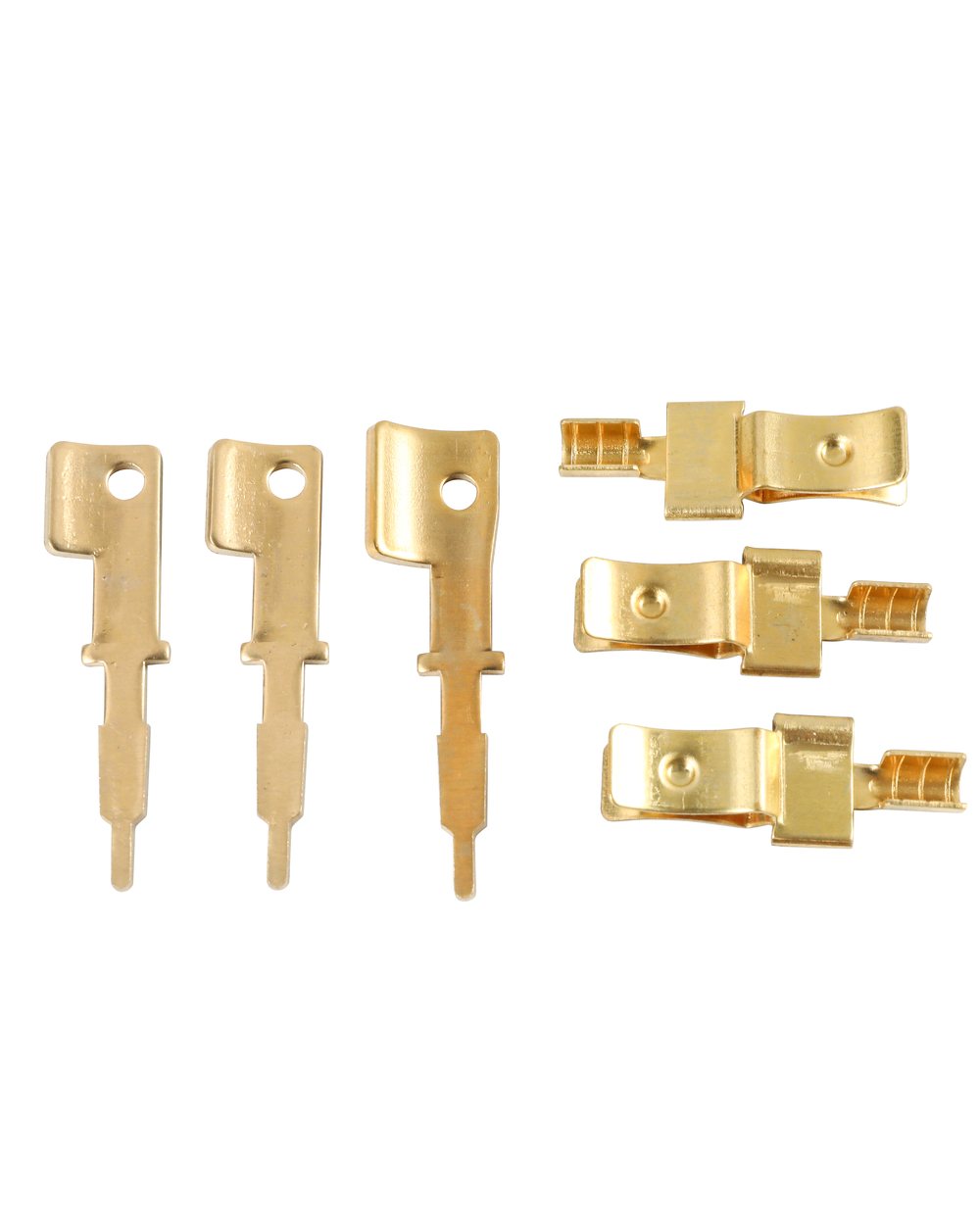
Materials & plating
Which brass, and which finish
Three material choices cover almost every terminal, and each is a different trade between conductivity, spring and cost.
| Grade | When it is the right choice | What you give up |
|---|---|---|
| H62 brass CuZn38 |
High-volume terminals that clamp a wire and are not themselves a spring. The default, and the most economical of the three. | Slightly lower copper content than H65, so lower conductivity — which rarely matters on a short internal link. |
| H65 brass CuZn35 |
Where the terminal is exposed, or where tarnish and corrosion resistance matter more than price. | Costs a little more than H62 for the same geometry. |
| Phosphor bronze C5191 / C5210 |
When the terminal is a spring element — a leaf that presses on the wire or the pin and has to keep pressing. | Higher material cost, and it is only worth it where a spring is actually doing work. |
| Plating tin / nickel |
Tin where the joint is soldered; nickel where the surface takes wear or has to resist corrosion. | An extra process step and a longer lead time — quoted with the part, never assumed. |
We do not quote a generic thickness or tolerance. Send the drawing and we will confirm the strip thickness the part needs, which dimensions we will measure and report, and the plating arrangement — rather than a number that will not survive your incoming inspection.
To quote
What we need from you
Send these and you will get a real price, not a request for more information.
- Drawing — 2D (PDF / DXF) or 3D (STEP), or a clear photo of the sample with a ruler in frame
- Material — H62, H65, phosphor bronze, or “whatever you recommend”
- Critical dimensions — which features actually matter, and to what tolerance
- Quantity — trial quantity and expected annual volume
- Surface — bare, tin-plated, nickel-plated, or your current supplier’s finish
- Packing — loose in bags, boxed, or on the carrier strip your line needs
Good to know
Common questions
Can you supply terminals still on the strip?
Yes. If your line inserts the terminal automatically, tell us the strip width, the pitch and the feed direction, and we will keep the parts on the carrier strip and pack them on reels or in stackable trays instead of loose in a bag.
Which brass for a terminal that clamps a wire?
If the clamping force comes from a screw or a separate spring, H62 or H65 is normally right. If the terminal is the spring — a leaf that has to stay pressed on the wire — that part should be phosphor bronze, because brass relaxes over time and the joint loosens with it.
Can you match a terminal we already buy?
Yes. Send a sample or whatever drawing you have. We will measure it, tell you which dimensions we would hold, and quote against that — so you are comparing like with like instead of a catalogue number.
Also in the range
The other families of brass parts
Most customers start with one family and add the rest once they see the quality.
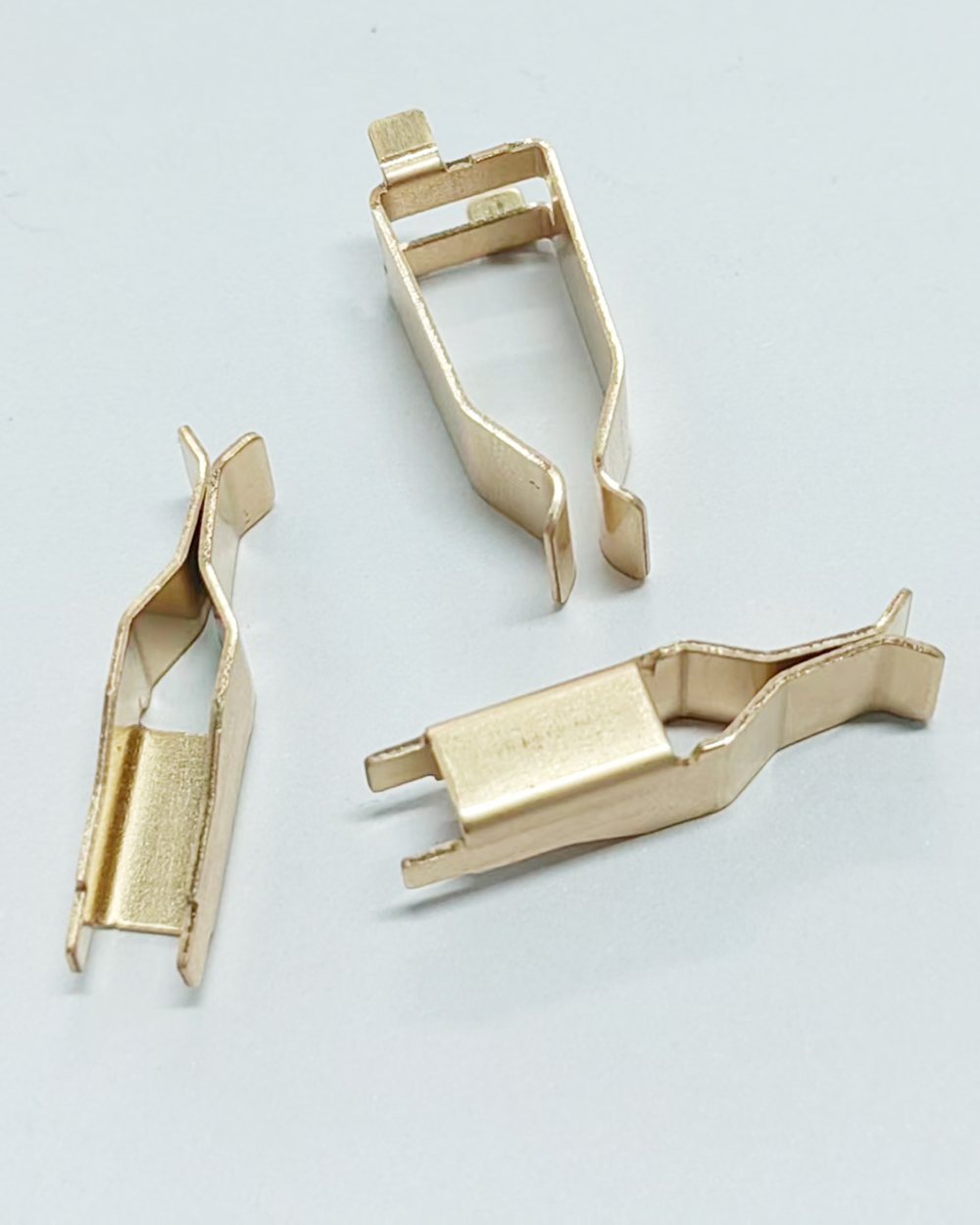
Socket inserts & contacts
The clips that grip the plug pins, in phosphor bronze where the spring has to last.
See this range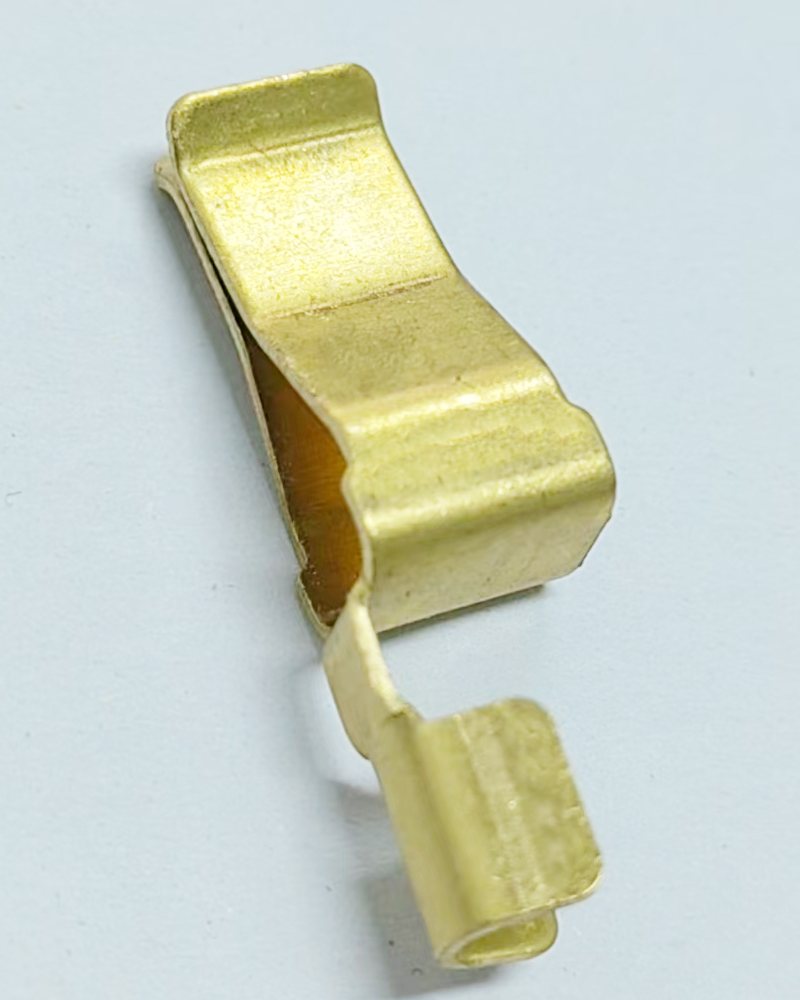
Grounding parts
Earth clips, side-earthing clips, grounding brackets and bonding straps.
See this range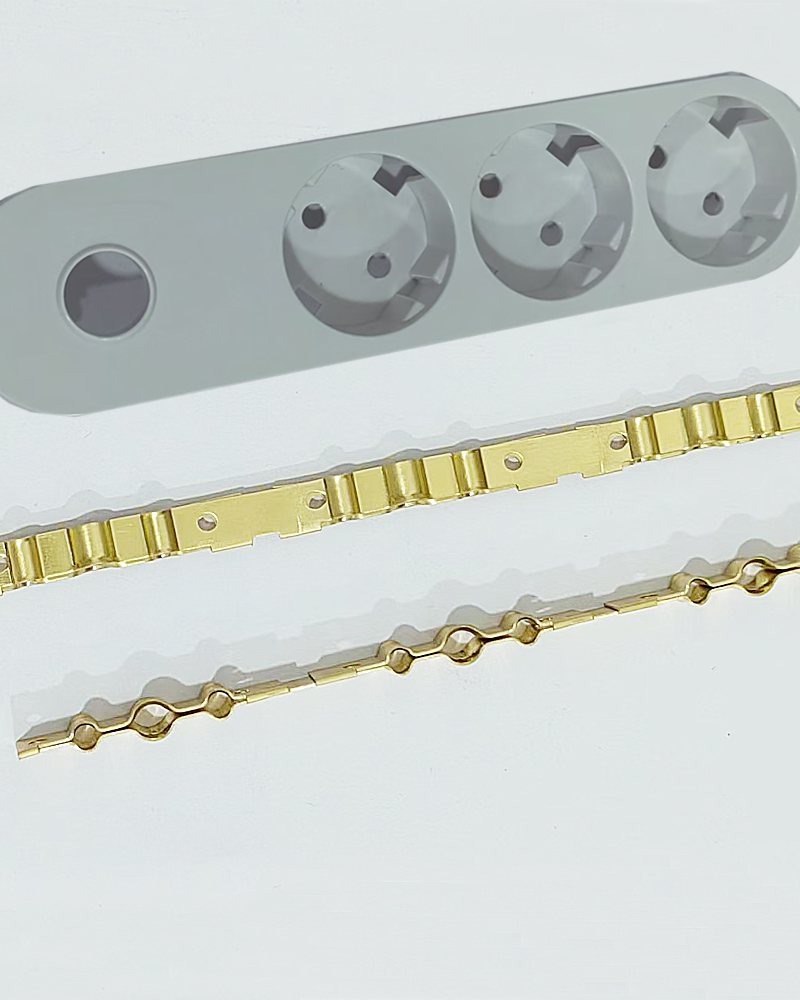
Connection plates & busbars
Bridging plates, jumper strips and multi-way busbars for power strips.
See this rangePins, blades & bushes
Plug pins and blades, hollow rivets, eyelets and threaded bushes.
See this range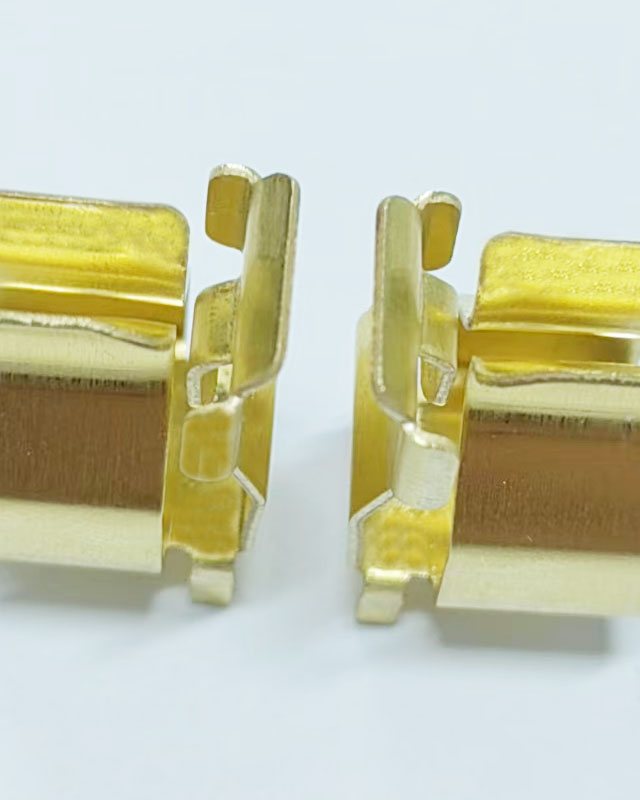
Custom stamped parts
Send the drawing and we will tell you straight away whether it is a good fit.
See this range