Pins, blades & bushes
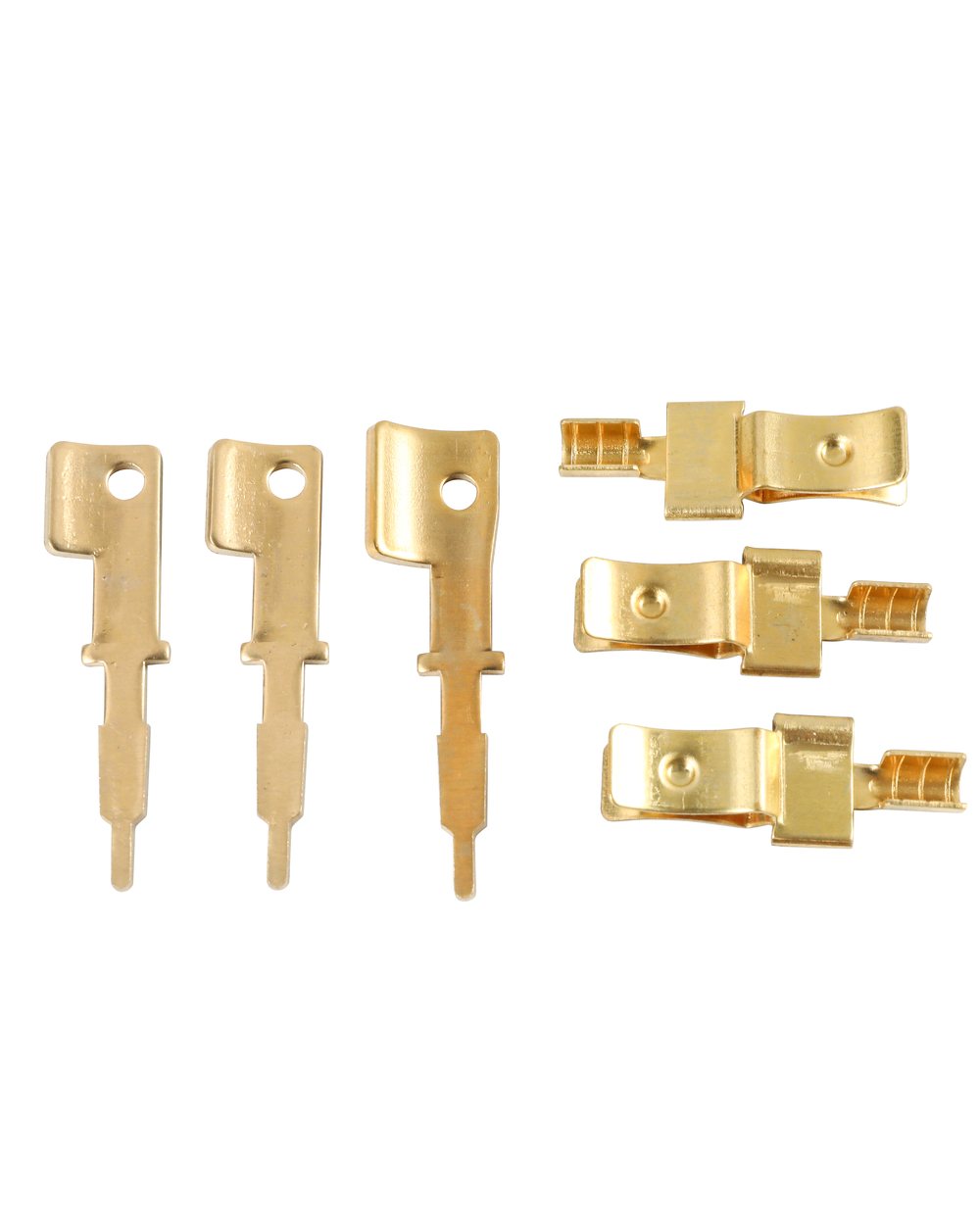
Small solid and hollow parts — plug pins and blades, hollow rivets and eyelets, threaded bushes and knurled pins — supplied loose, in strip form, or already assembled onto the contact.
What we stamp
Pins, rivets and bushes
The small parts that get taken for granted until a pin wears oval or a rivet works loose. Material and plating here follow the job: conductivity and insertion wear for a pin, mechanical strength for a rivet or a bush.
- Plug pins and blades in the profile your standard requires
- Hollow rivets and eyelets
- Threaded bushes and inserts
- Knurled and slotted pins
- Rivets for socket sub-assemblies
- Pins formed and finished by a secondary operation
- Pins and contacts supplied already assembled together
Pins and blades are formed from strip and then finished — rolled, chamfered, knurled or threaded depending on the profile. If a part in your design genuinely needs turning rather than stamping, we will tell you that instead of taking the order and finding out later.
Materials & plating
Two different jobs, two different specs
A plug pin and a rivet look similar on a drawing and want opposite things from the metal. One is about conductivity and wear at the surface; the other is about holding a joint together under load.
| Part | What it needs from the metal | Typical choice |
|---|---|---|
| Plug pins and blades | Good conductivity, a surface that survives insertion cycles without wearing or picking up tarnish, and a profile held to the standard. | H62 or H65 brass, usually nickel-plated on the contact surface. Tin where the pin is soldered rather than wiped. |
| Hollow rivets and eyelets | Formability and a consistent wall: the rivet has to flare or roll without cracking, every time. | H62 brass — the most formable of the grades, which is exactly what a rivet needs. |
| Threaded bushes and inserts | Mechanical strength and enough hardness to hold a thread without stripping under torque. | Brass selected for temper rather than conductivity; tell us the screw size and the torque expected. |
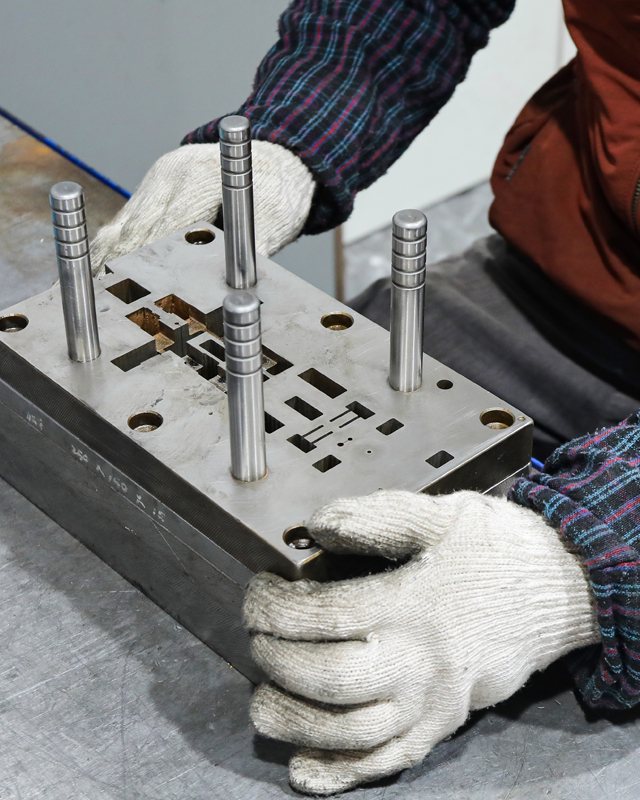
| Knurled and slotted pins | A formed surface that grips the plastic housing and resists rotation. | H62 or H65; the knurl form is cut into the die, so the profile is set once and repeats. |
Pins are where incoming inspection finds trouble first. A pin that is a few hundredths out, or whose plating is thin at the tip, shows up as a loose fit or a hot spot rather than as a visible defect. Send the drawing and we will confirm the profile, the plating thickness arrangement and which dimensions we will measure and report per batch.
To quote
What we need from you
- Drawing — 2D (PDF / DXF) or 3D (STEP), with the pin profile dimensioned
- Standard — BS1363, Schuko, NEMA 5-15, AS/NZS 3112, Type L, or your own profile
- Material and plating — brass grade, and whether the surface is plated
- Quantity — trial quantity and expected annual volume
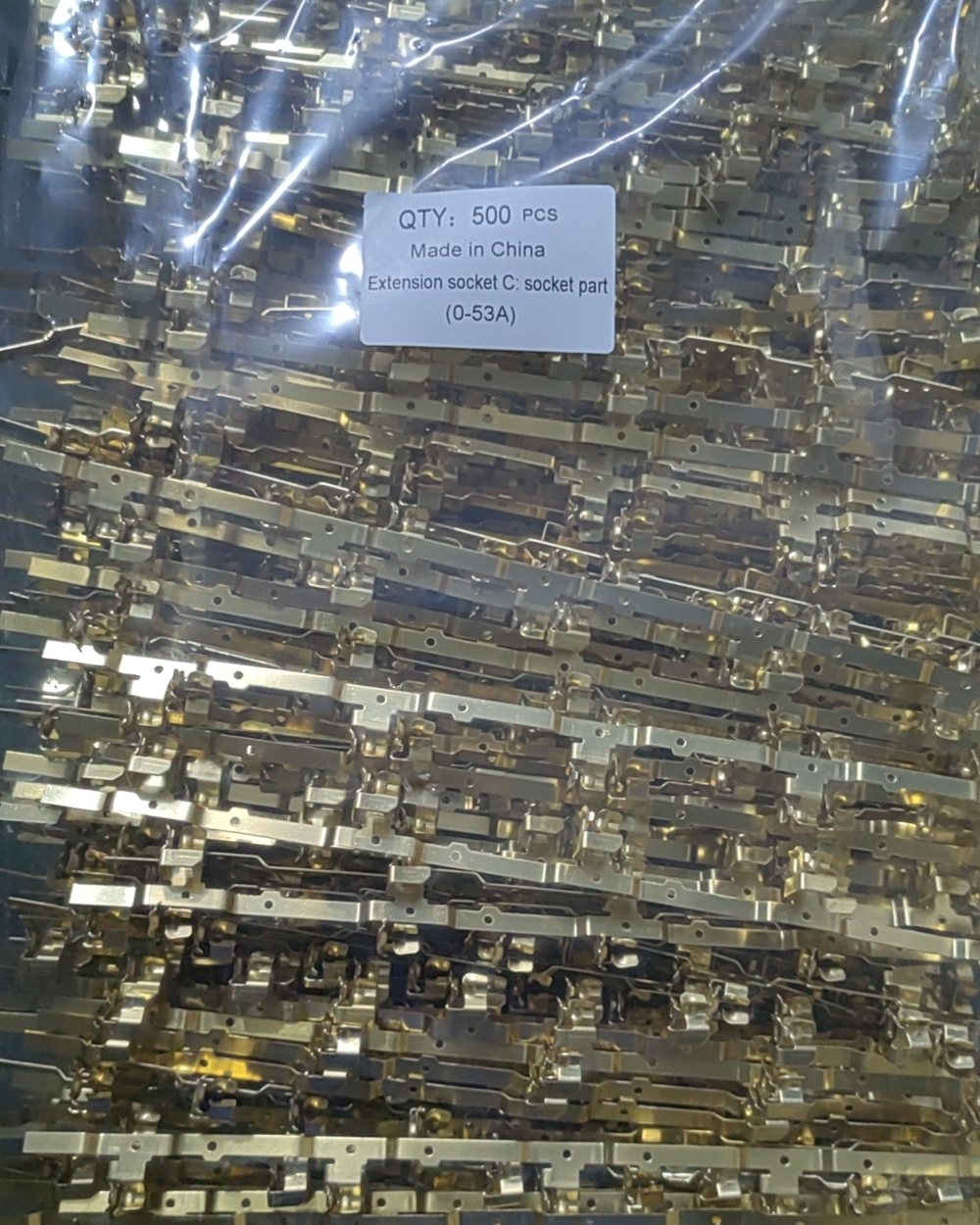
- Packing — loose in bags, in stackable trays, or on strip / in reels
- Assembly — whether the pin ships on its own or already fitted to the contact
Good to know
Common questions
Are the pins made to a standard profile?
They are made to your profile, which may follow a standard — the rectangular blade of BS1363, the round pin of Schuko, NEMA, AS/NZS or Type L. Send the drawing or a sample; a standard name alone is not enough, because the tolerances and the plating are still yours to set.
Loose, or fed from strip?
Both. If your line feeds pins automatically, tell us the strip width, the pitch and the feed direction and we will keep them on the carrier. If they are fitted by hand or by a pick-and-place head, loose in trays is usually cheaper and easier.
What plating do pins need?
Nickel on the contact surface where the pin is wiped by the socket contact, because it survives insertion cycles and resists tarnish. Tin where the joint is soldered. For humid or coastal markets we will usually recommend plating even where an unplated pin would pass a lab test.
Also in the range
The other families of brass parts
Most customers start with one family and add the rest once they see the quality.
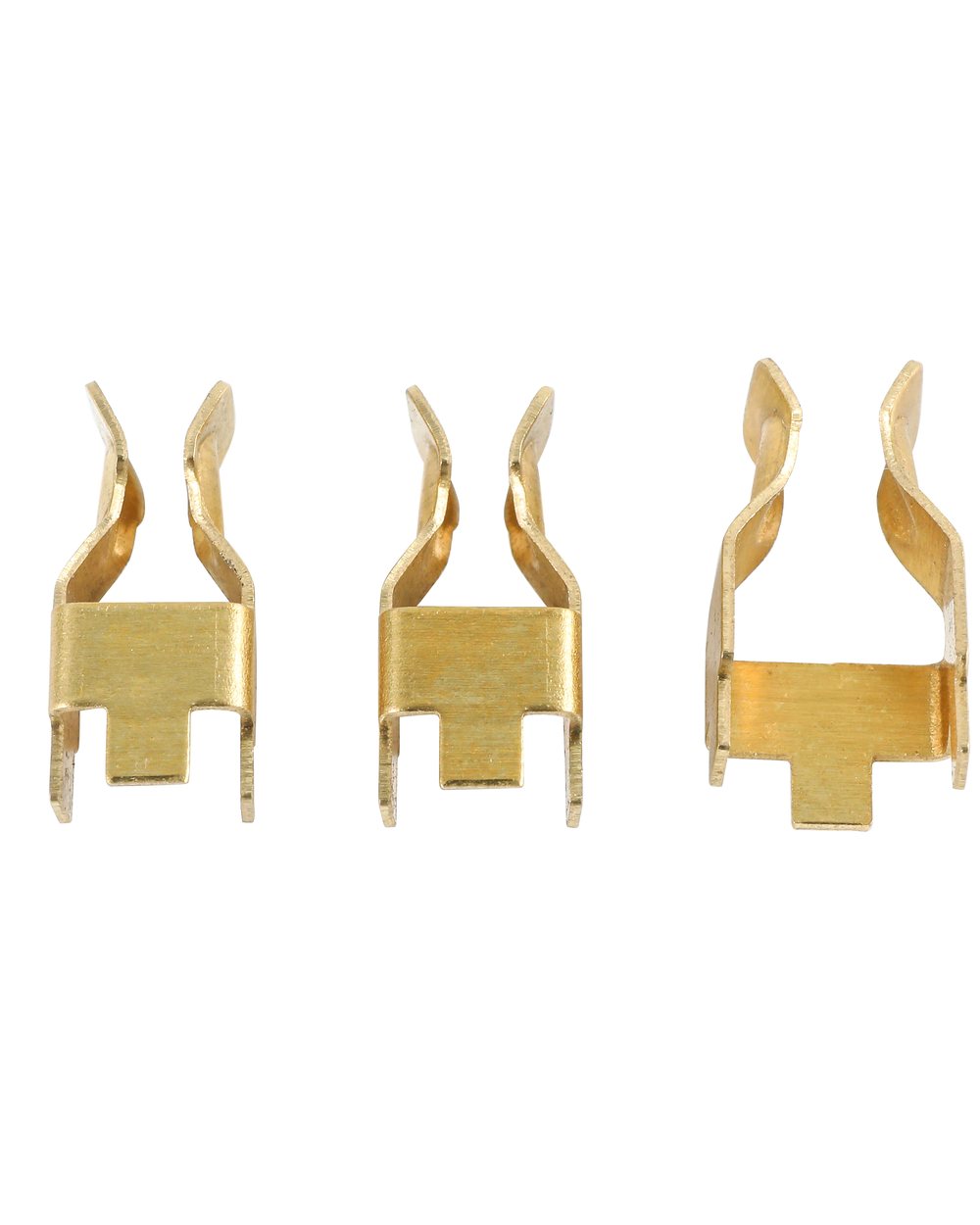
Brass terminals
Screw, wire-clamp, spade and ring terminals, terminal blocks and fuse clips.
See this range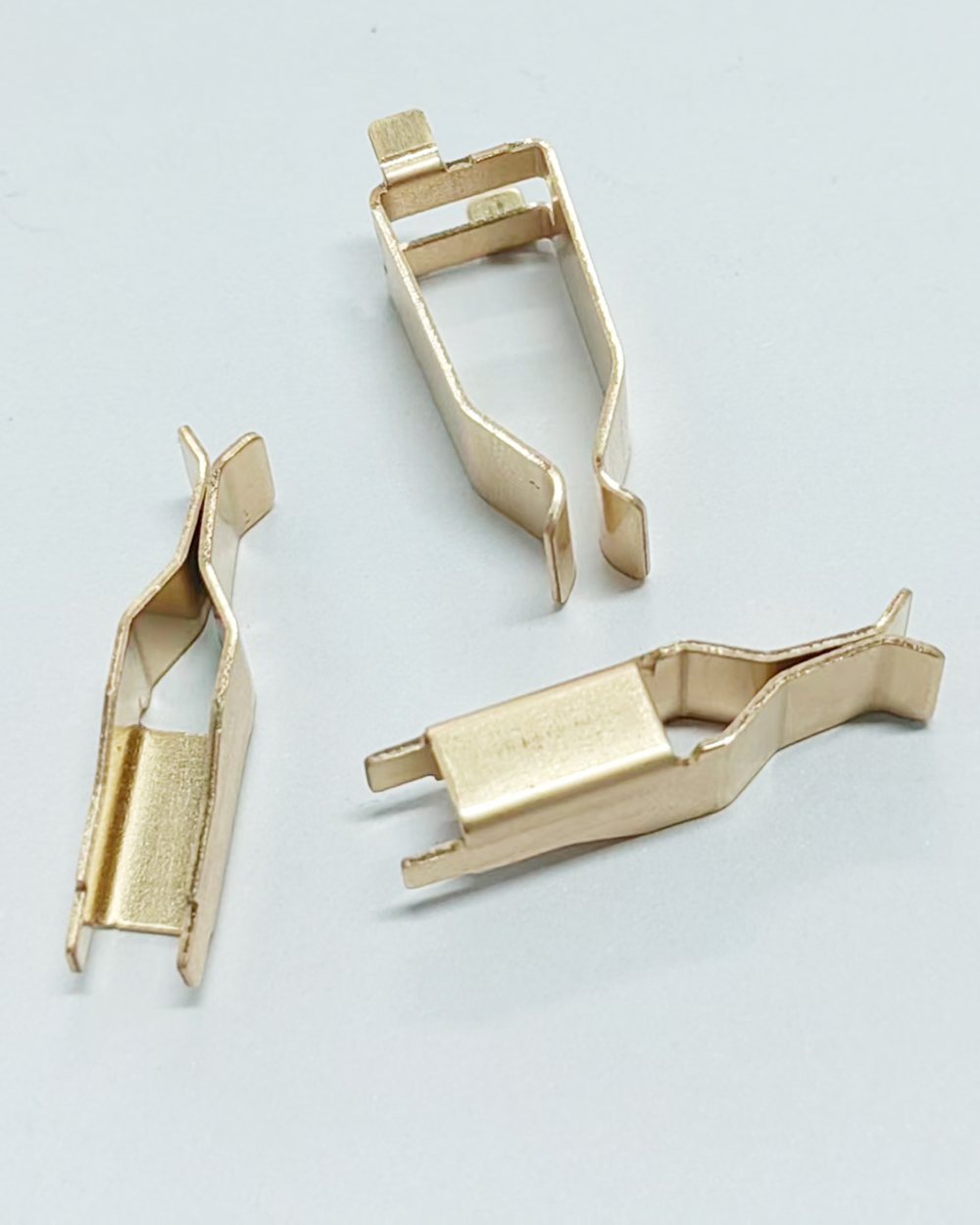
Socket inserts & contacts
The clips that grip the plug pins, in phosphor bronze where the spring has to last.
See this range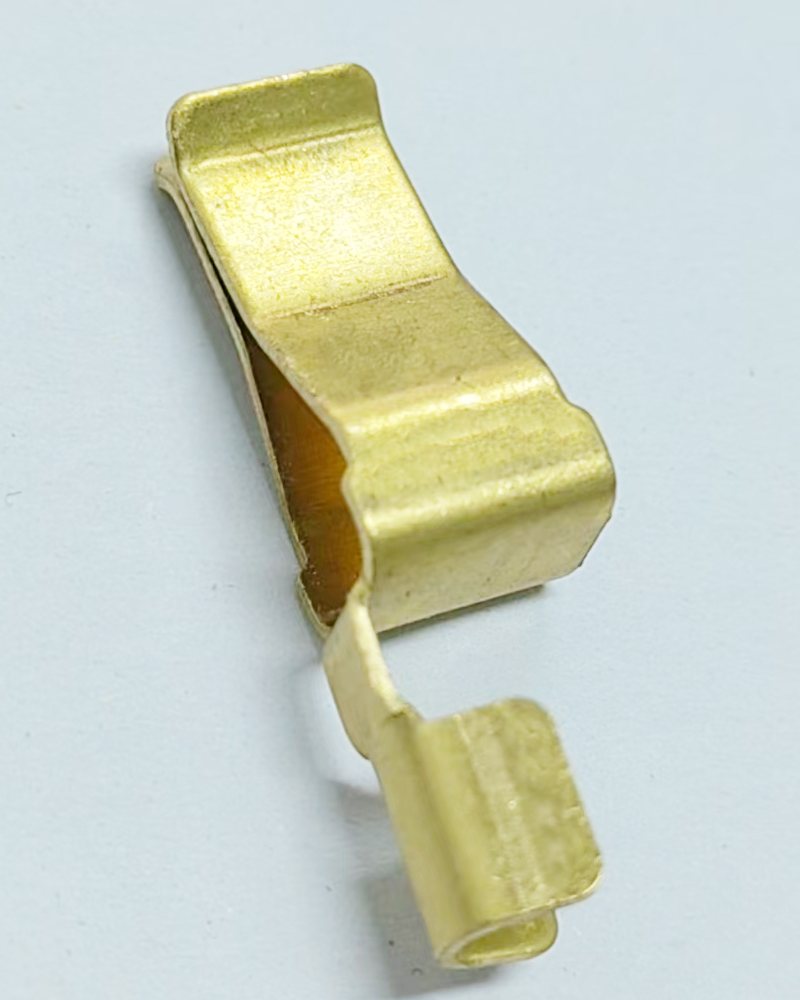
Grounding parts
Earth clips, side-earthing clips, grounding brackets and bonding straps.
See this range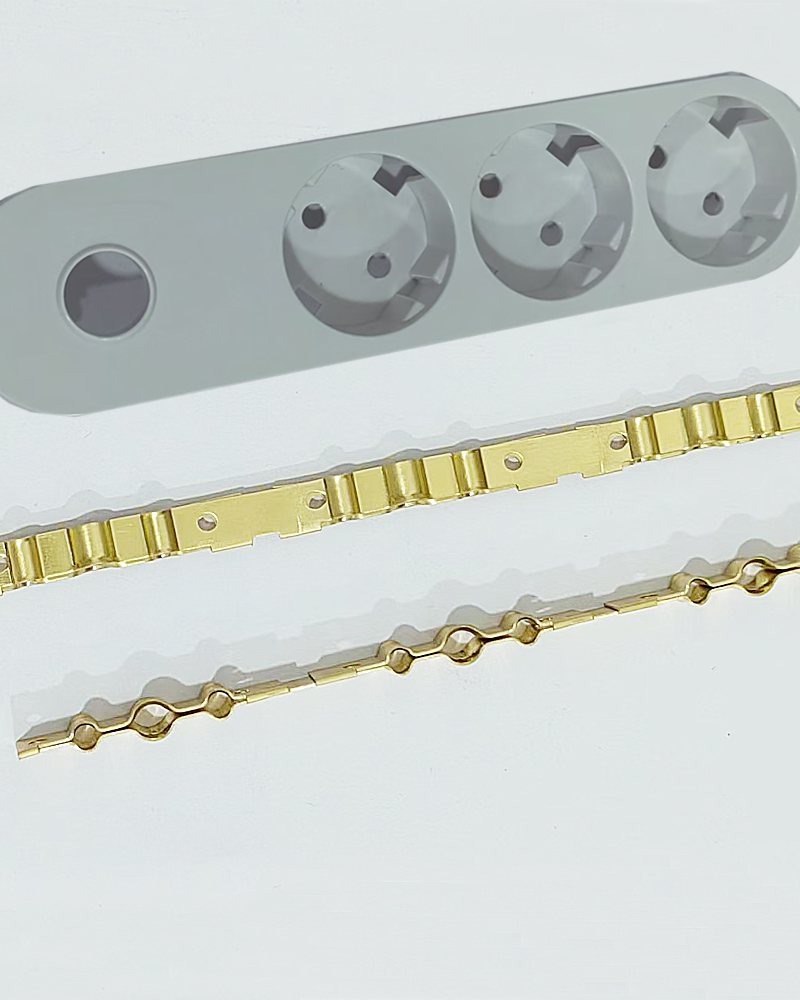
Connection plates & busbars
Bridging plates, jumper strips and multi-way busbars for power strips.
See this range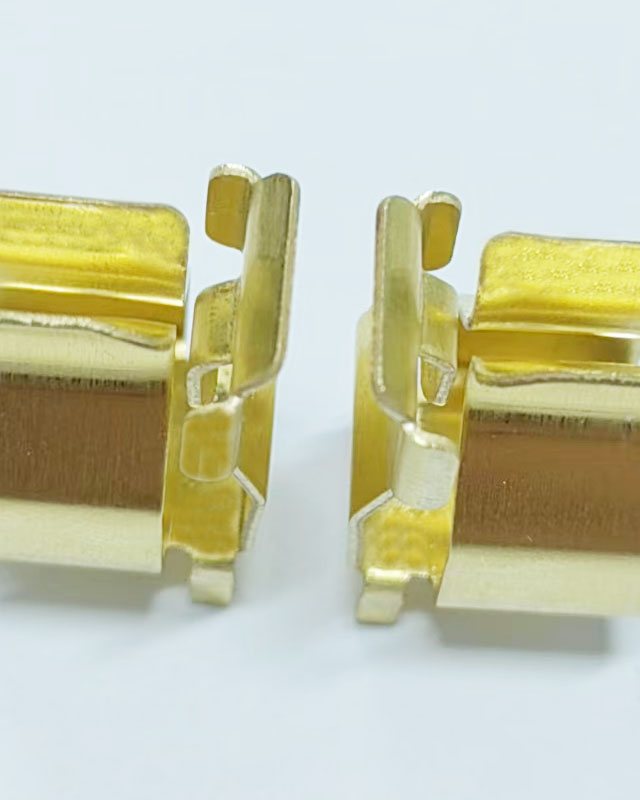
Custom stamped parts
Send the drawing and we will tell you straight away whether it is a good fit.
See this range