Connection plates & busbars
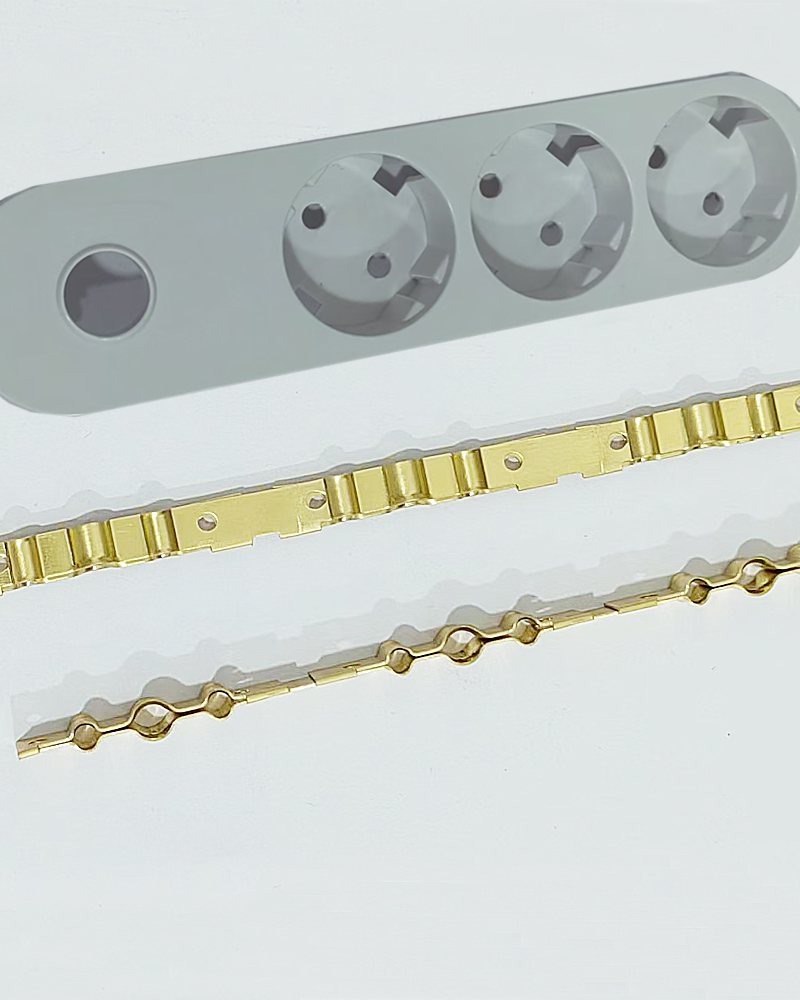
The flat brass that ties poles together and distributes current across a power strip or a multi-gang socket. Simple geometry, unforgiving tolerance — a plate that is a fraction out will not line up across the assembly.
What we stamp
Plates, strips and busbars
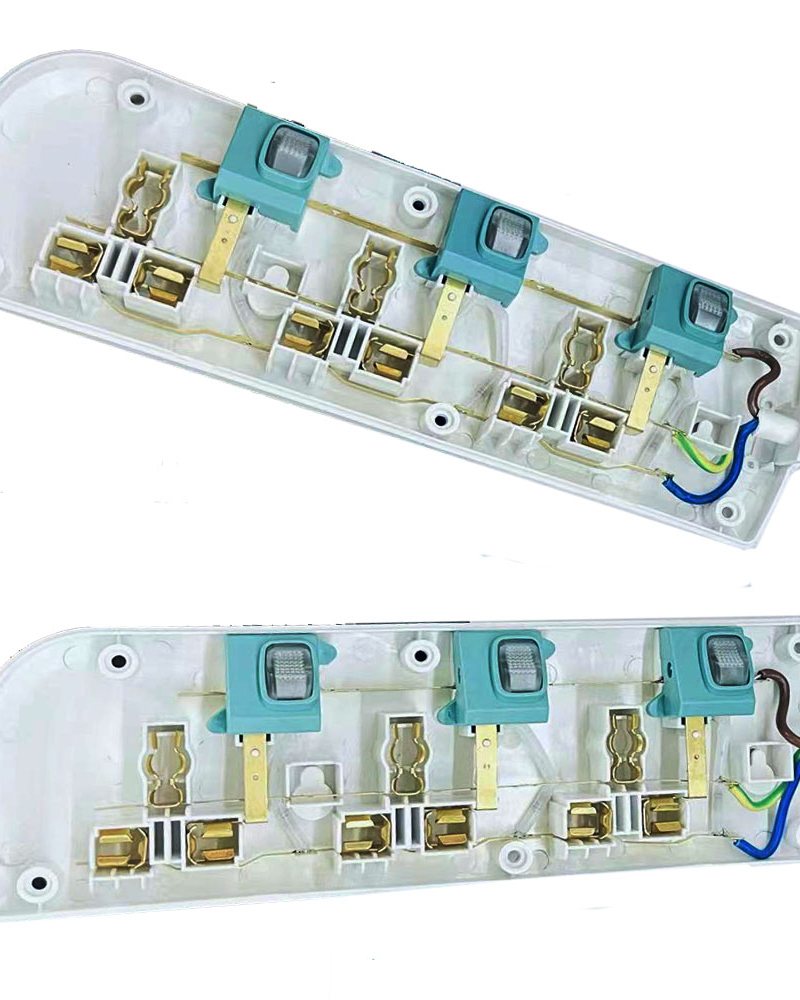
These parts are how the current gets from one outlet to the next, and how a multi-gang assembly holds together. The dimension that matters is rarely the outline — it is the hole position, and whether the plate stays flat after forming.
- Bridging plates between socket outlets
- Jumper strips and link plates
- Multi-way busbars for power strips
- Switch and indicator connection plates
- Earth busbars
- Plates with formed terminals or riveted contacts
- Cut-to-length strips supplied in fixed multiples
Hole position and hole diameter are the critical features, because they are what decides whether the plate drops onto the housing or fights it. Those are the dimensions we measure and report per batch.
Materials & tolerance
Where the difficulty actually lies
The alloy is the easy decision here. The hard part is holding position and flatness across a long, thin stamped strip — which is a tooling and process question, not a material one.
| Grade | Why it is used | Note |
|---|---|---|
| H62 brass CuZn38 |
The default for plates and busbars: economical, forms well and carries current easily over the short distances involved. | Lower corrosion resistance than H65 if the part is exposed. |
| H65 brass CuZn35 |
Where the plate is exposed, or where a customer specification already calls for the higher copper content. | Slightly harder to form at tight radii than H62. |
| Thickness | Set by the current the plate carries and by the stiffness the assembly needs — a busbar that flexes when a plug is inserted will loosen its own joints. | Confirmed against your drawing, not assumed from a catalogue. |
| Hole position | The feature your assembly actually depends on. Position and diameter are what we measure and report batch by batch. | Tell us which holes are critical and which are clearance. |
| Flatness / camber | A long strip that comes off the press with camber will not sit flat in the housing, however accurate the holes are. | Controlled by tooling design and by how the strip is straightened and packed. |
Send the mating part, if you can. Plates fail on fit, not on measurement. If you can send the housing or the socket body the plate has to sit in, we can check the fit on the first article instead of discovering the problem in your assembly line.
To quote
What we need from you
- Drawing — 2D (PDF / DXF) or 3D (STEP), with hole positions dimensioned
- Critical holes — which ones the assembly depends on, and to what tolerance
- Material and thickness — H62, H65, or “whatever you recommend”
- Quantity — trial quantity, and whether it is one plate or a set per socket
- Flatness requirement — if your assembly is sensitive to camber, say so up front
- Packing — loose, stacked, or supplied as a matched set for one assembly
Good to know
Common questions
How do you control hole position across a long plate?
With the die and the feed, not by sorting afterwards. Progressive tooling keeps the holes in one coordinate system relative to the same strip, so position does not drift along the length. We then measure and report the holes you have flagged as critical, batch by batch.
Can you rivet or form other parts onto the plate?
Yes. Plates often go out with a contact riveted on, a terminal folded up, or a secondary bend already made — which saves you a step and removes a joint from your assembly. Tell us the finished arrangement and we will quote it as one delivered part.
Do you supply plates in matched sets?
If one socket or one power strip needs a live, a neutral and an earth plate, we can pack them as a set in the quantity your assembly consumes — so your line does not have to kit them separately.
Also in the range
The other families of brass parts
Most customers start with one family and add the rest once they see the quality.
Brass terminals
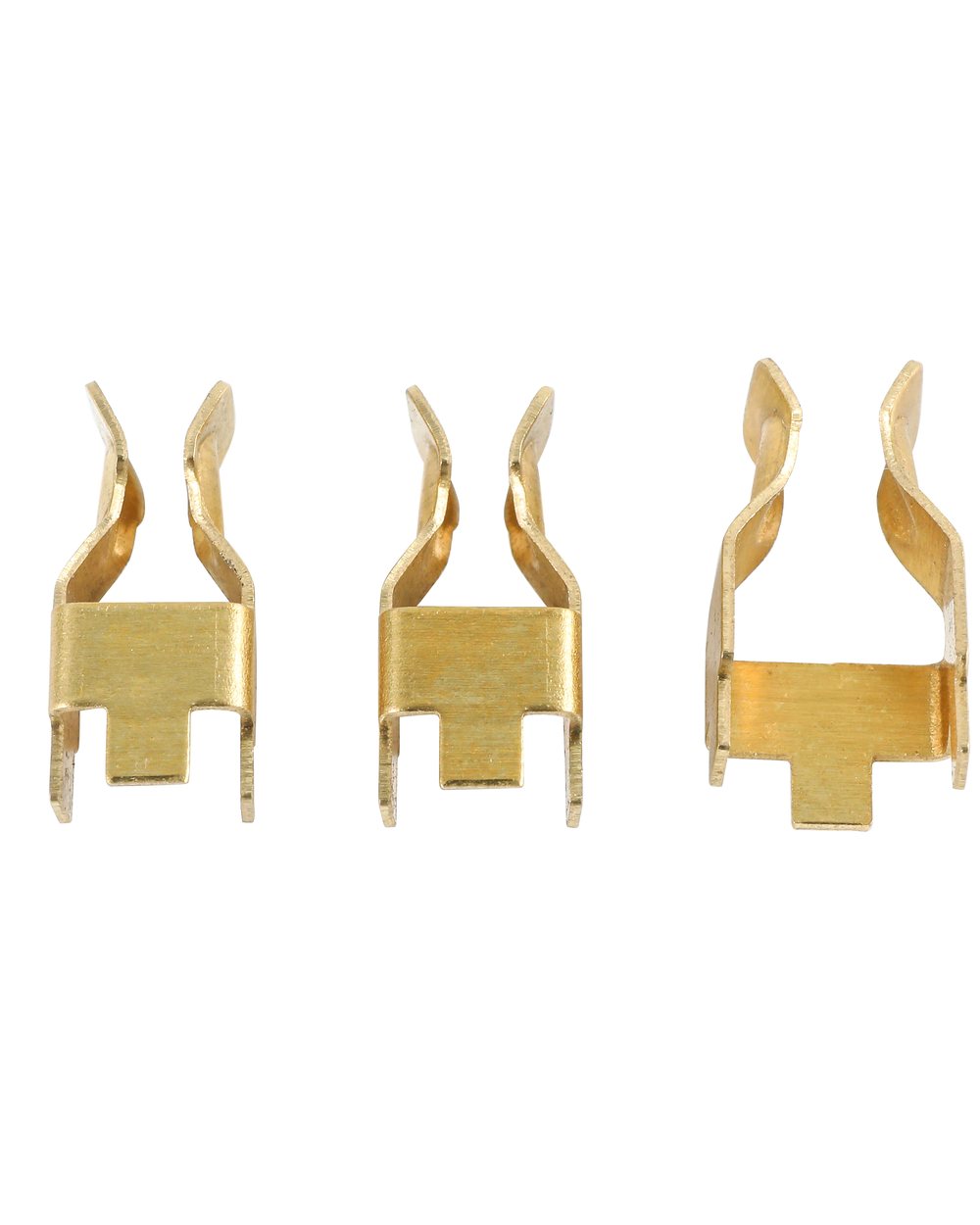
Screw, wire-clamp, spade and ring terminals, terminal blocks and fuse clips.
See this range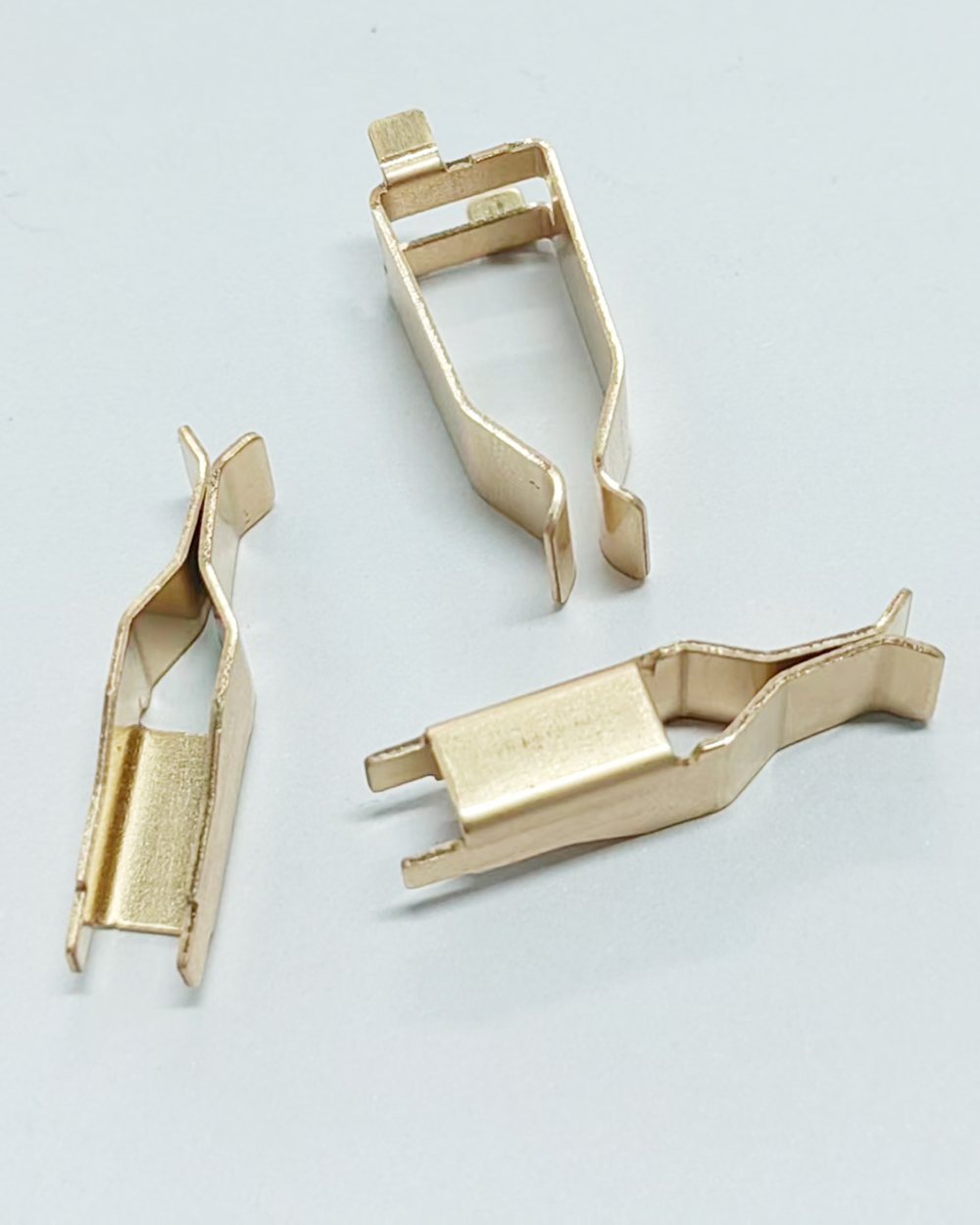
Socket inserts & contacts
The clips that grip the plug pins, in phosphor bronze where the spring has to last.
See this range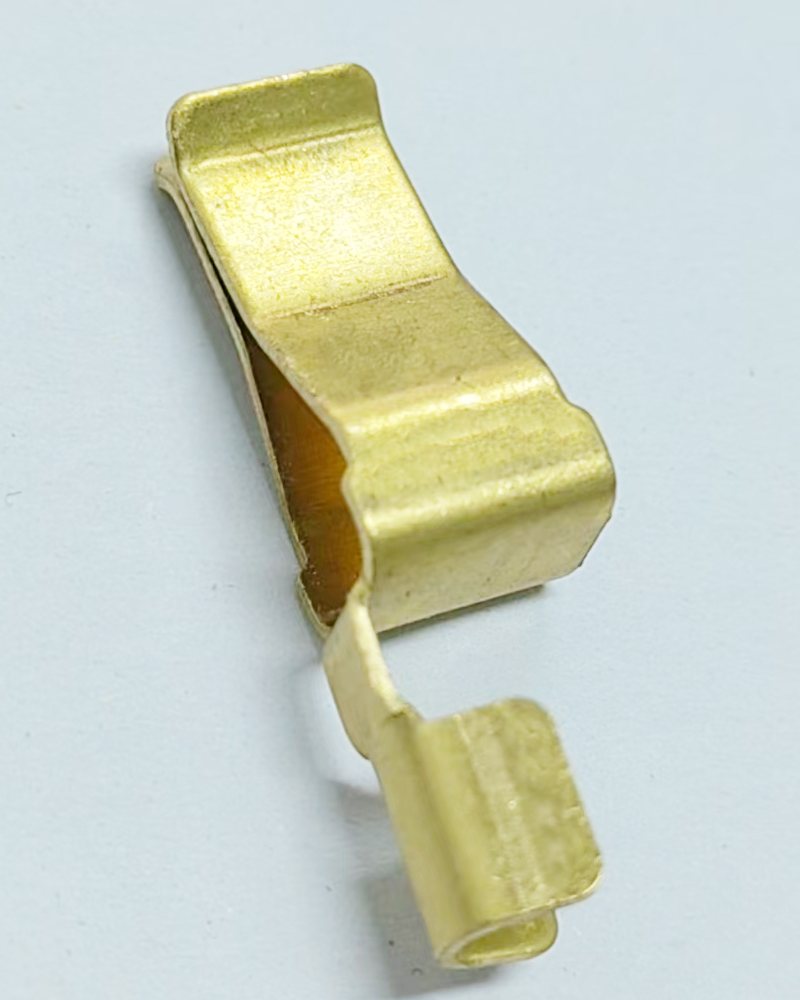
Grounding parts
Earth clips, side-earthing clips, grounding brackets and bonding straps.
See this range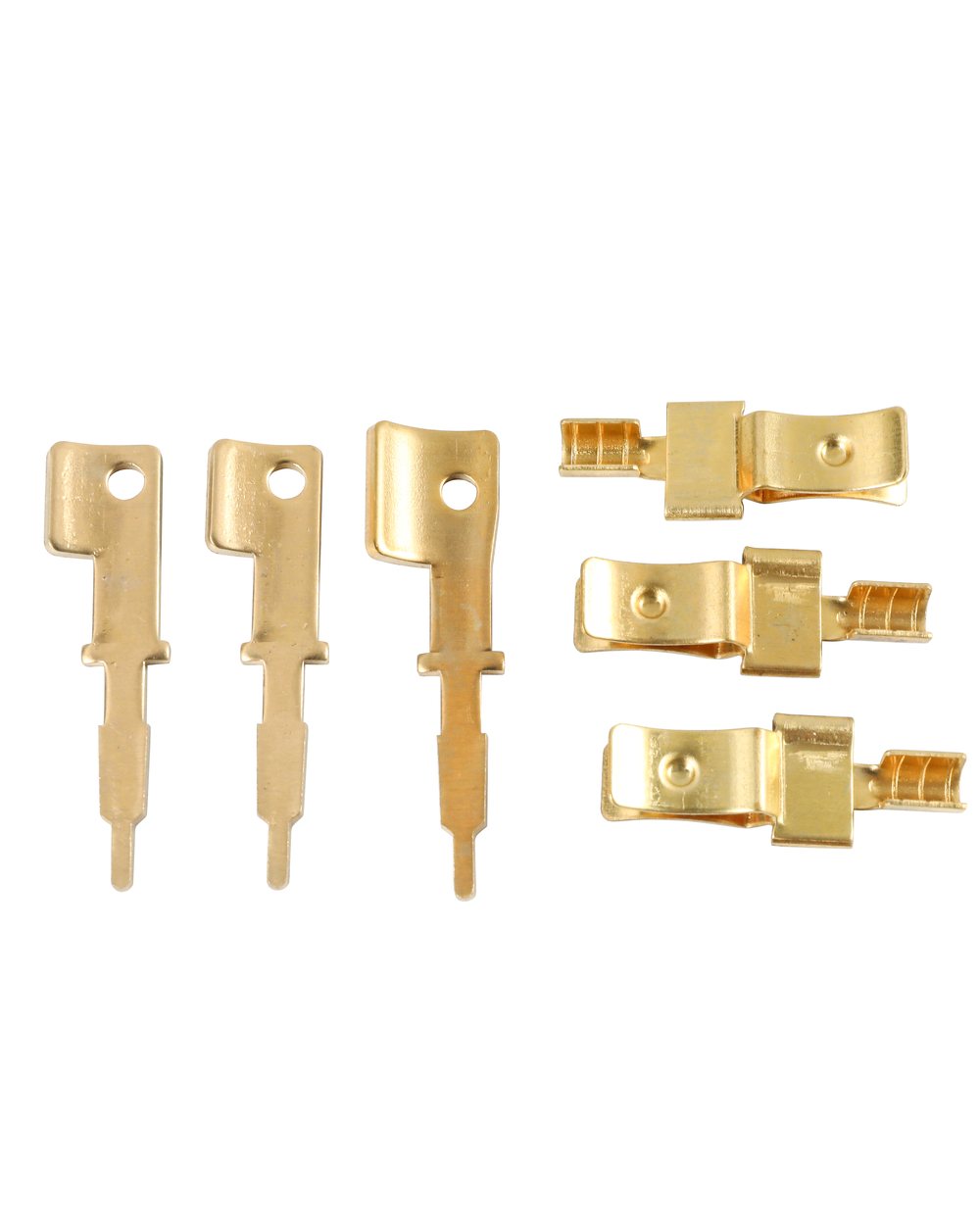
Pins, blades & bushes
Plug pins and blades, hollow rivets, eyelets and threaded bushes.
See this range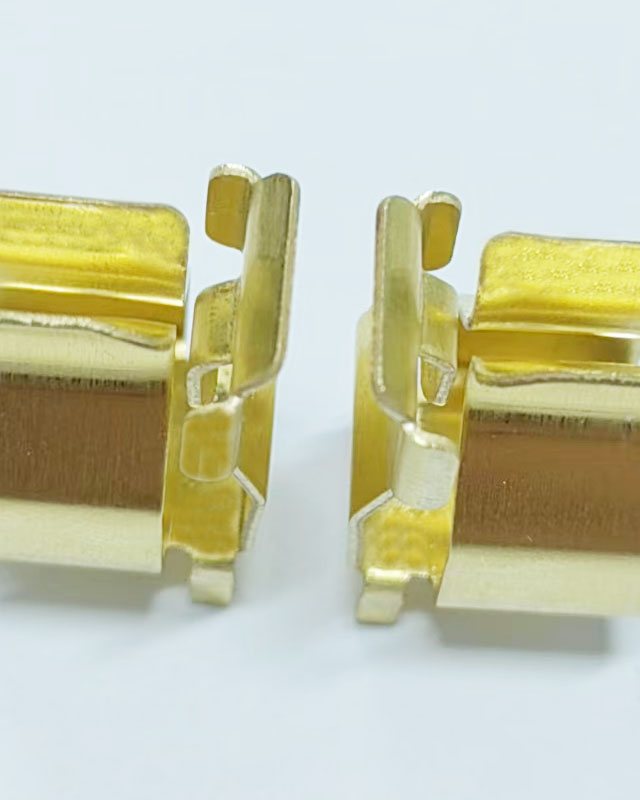
Custom stamped parts
Send the drawing and we will tell you straight away whether it is a good fit.
See this range