Socket inserts & contact clips
The clips that grip the plug pins. This is the part a customer complains about when a socket stops holding — which makes it the part where the material choice matters most.
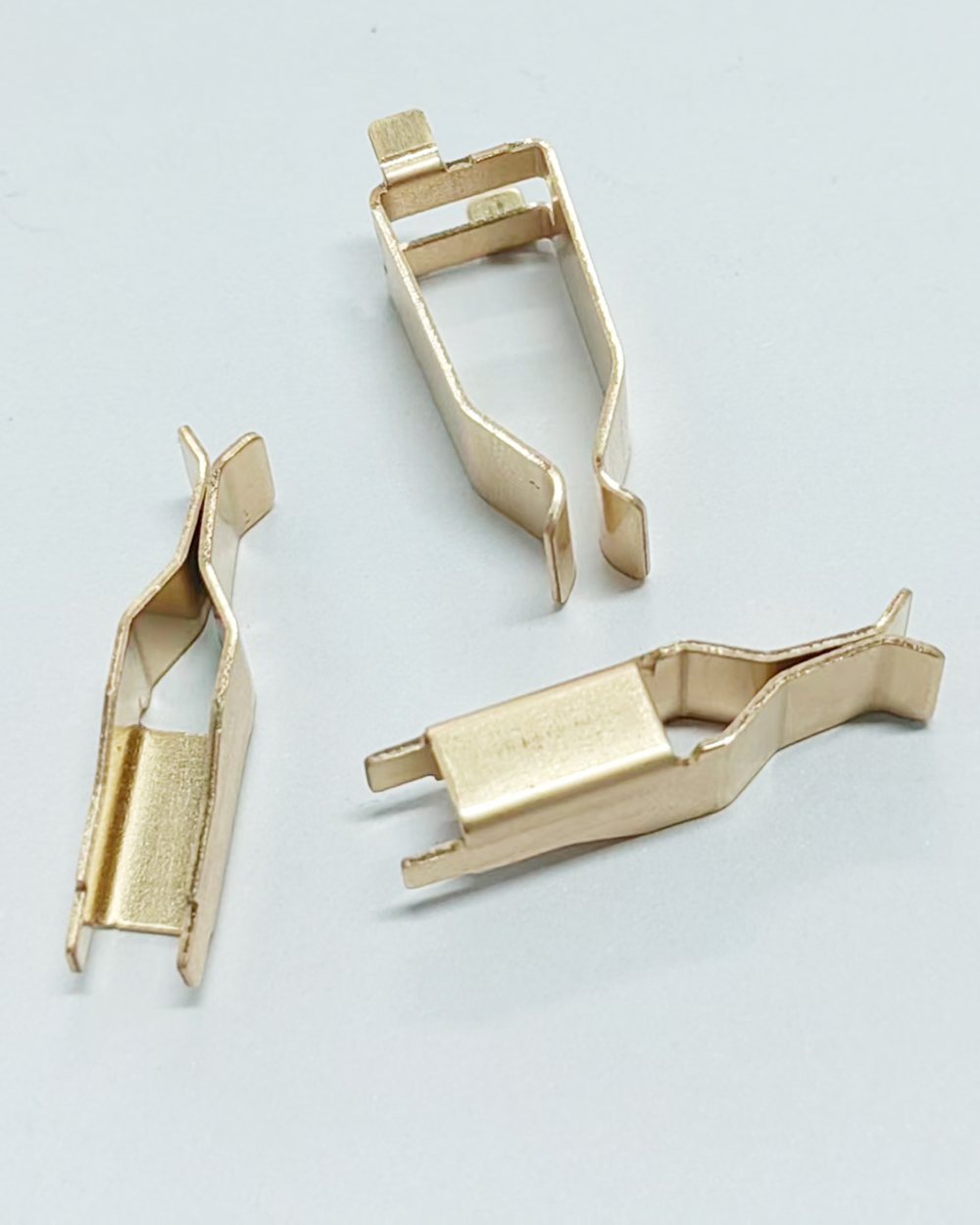
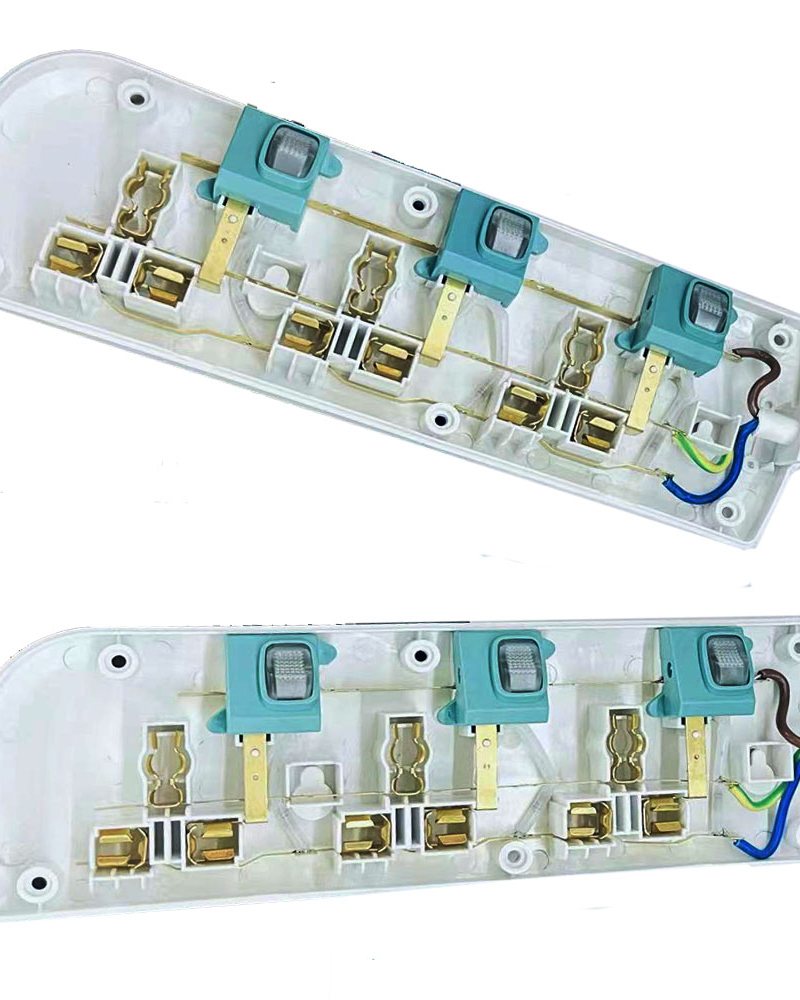
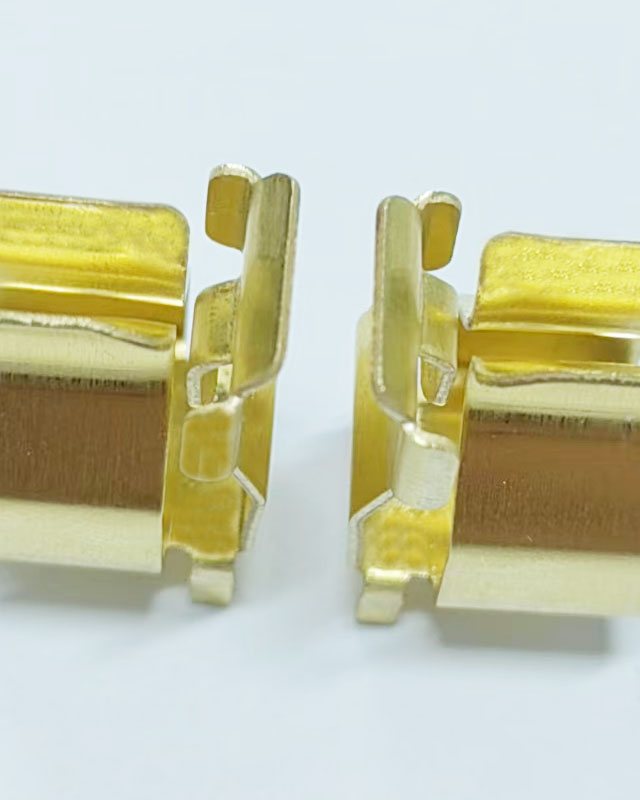
What we stamp
Contact types
An insert does three jobs at once: it touches the pin, it presses on the pin, and it carries the current away. The geometry sets the first and the third. The alloy sets the second — and that is the one that decides whether the socket still holds in year three.
- Live, neutral and earth contact clips
- Two-pole and three-pole contact assemblies
- Spring contacts and multi-contact inserts
- Contacts joined on strip for automatic insertion
- Shuttered and child-protected socket contacts
- Double-contact and twin-leaf geometries
- Contacts pre-formed for a specific plug profile
Contact pressure and the working deflection are read off your drawing. On the first-article sample we check spring-back and fit, because two parts can measure identically and still grip differently once they have been inserted a few hundred times.
Materials
Why this is the one part where brass is often wrong
Every other brass part in a socket is judged on geometry. This one is judged on what happens to the metal after ten thousand insertions — and that is a property of the alloy, not the drawing.
| Grade | Behaviour in a contact clip | Use it when |
|---|---|---|
| Phosphor bronze C5191 / C5210 |
Higher elastic limit and much better resistance to stress relaxation: the clip keeps pressing on the pin instead of taking a set and going slack. This is the usual choice for a live contact. | The contact is spring-loaded and has to keep its grip over the life of the socket. Most applications. |
| H65 brass CuZn35 |
Good conductivity and good corrosion resistance, but it relaxes: under a permanent deflection it slowly stops pushing back. | The contact is held in place by the housing rather than by its own spring, and the fit is controlled by the plastic. |
| H62 brass CuZn38 |
The most economical and the easiest to form, with the least spring of the three. | Non-spring internal links, or a contact where a separate spring element does the work. |
| Plating nickel / tin |
Nickel resists wear and corrosion on the contact face; tin is used where the joint is soldered rather than wiped. | High insertion counts, humid or coastal markets, or a customer specification you have to match. |
Grip is measured, not assumed. Send the drawing and we will come back with a material recommendation, the deflection we can hold, and which dimensions we will measure and report per batch — rather than a generic contact force that will not reproduce on your line.
To quote
What we need from you
- Drawing — 2D (PDF / DXF) or 3D (STEP), or a clear photo of the sample with a ruler in frame
- Plug standard — BS1363, Schuko, NEMA 5-15, AS/NZS 3112, Type L, or your own profile
- Material — phosphor bronze, H65, or “whatever you recommend for the grip”
- Critical dimensions — the gap, the deflection, the insertion axis
- Quantity — trial quantity and expected annual volume
- Packing — loose, or on strip for automatic insertion
Good to know
Common questions
Why does a socket lose its grip over time?
Almost always stress relaxation in the contact clip. The clip is permanently deflected, and over thousands of insertion cycles the metal stops pushing back — so the contact area shrinks, resistance rises and the joint runs warmer. The fix is at the material specification, not at the moulding.
Phosphor bronze or brass for the contact?
If the clip has to spring, phosphor bronze. Full stop. Brass is cheaper and forms more easily, but it will not hold a permanent deflection the way phosphor bronze does. If the contact is not spring-loaded in your design, brass is a perfectly reasonable and cheaper choice — and we will say so rather than upsell you.
Can you match the grip of the part we use now?
Send a sample and we will measure it, including how it behaves after repeated insertion, then quote against that. Comparing grip honestly is the only way to switch contact suppliers without discovering the difference in the field.
Also in the range
The other families of brass parts
Most customers start with one family and add the rest once they see the quality.
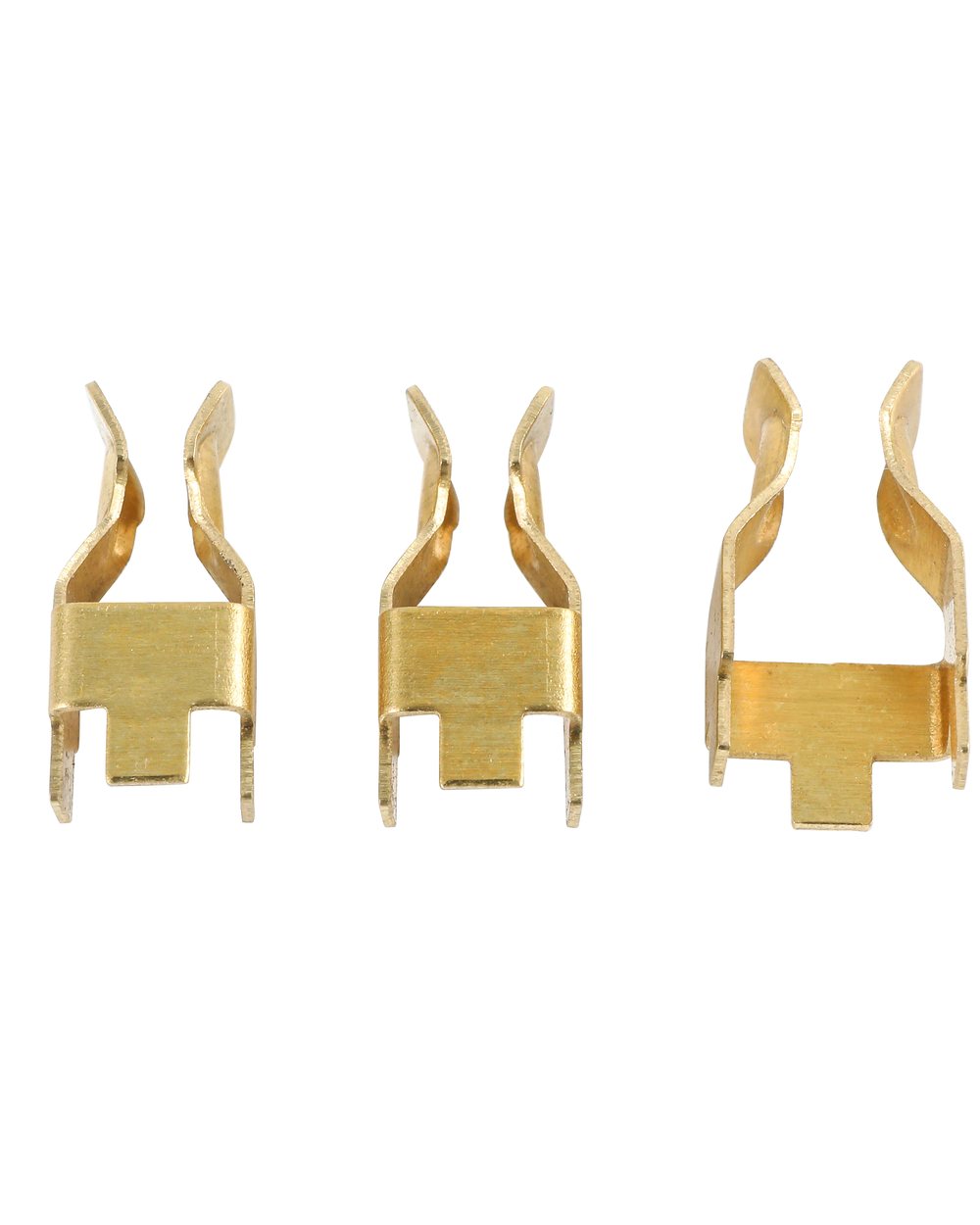
Brass terminals
Screw, wire-clamp, spade and ring terminals, terminal blocks and fuse clips.
See this range
Grounding parts
Earth clips, side-earthing clips, grounding brackets and bonding straps.
See this range
Connection plates & busbars
Bridging plates, jumper strips and multi-way busbars for power strips.
See this range
Pins, blades & bushes
Plug pins and blades, hollow rivets, eyelets and threaded bushes.
See this rangeCustom stamped parts
Send the drawing and we will tell you straight away whether it is a good fit.
See this range