Brass parts for smart sockets
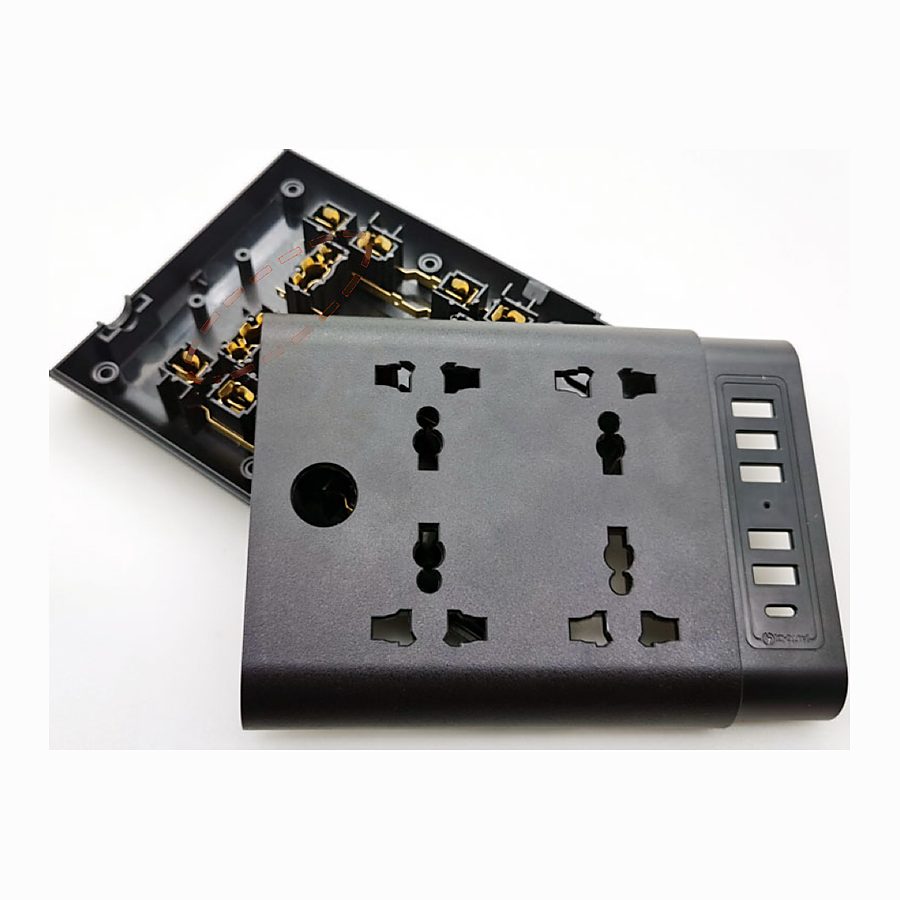
A smart socket is an ordinary socket with a relay, a measuring or sensing module and often USB charging added behind the same contacts. We make the brass that carries the current and holds the pins — and we supply the plastic housing, the hardware and the cable that go around it, so the accessory set arrives together.
What goes in
The brass inside a smart socket
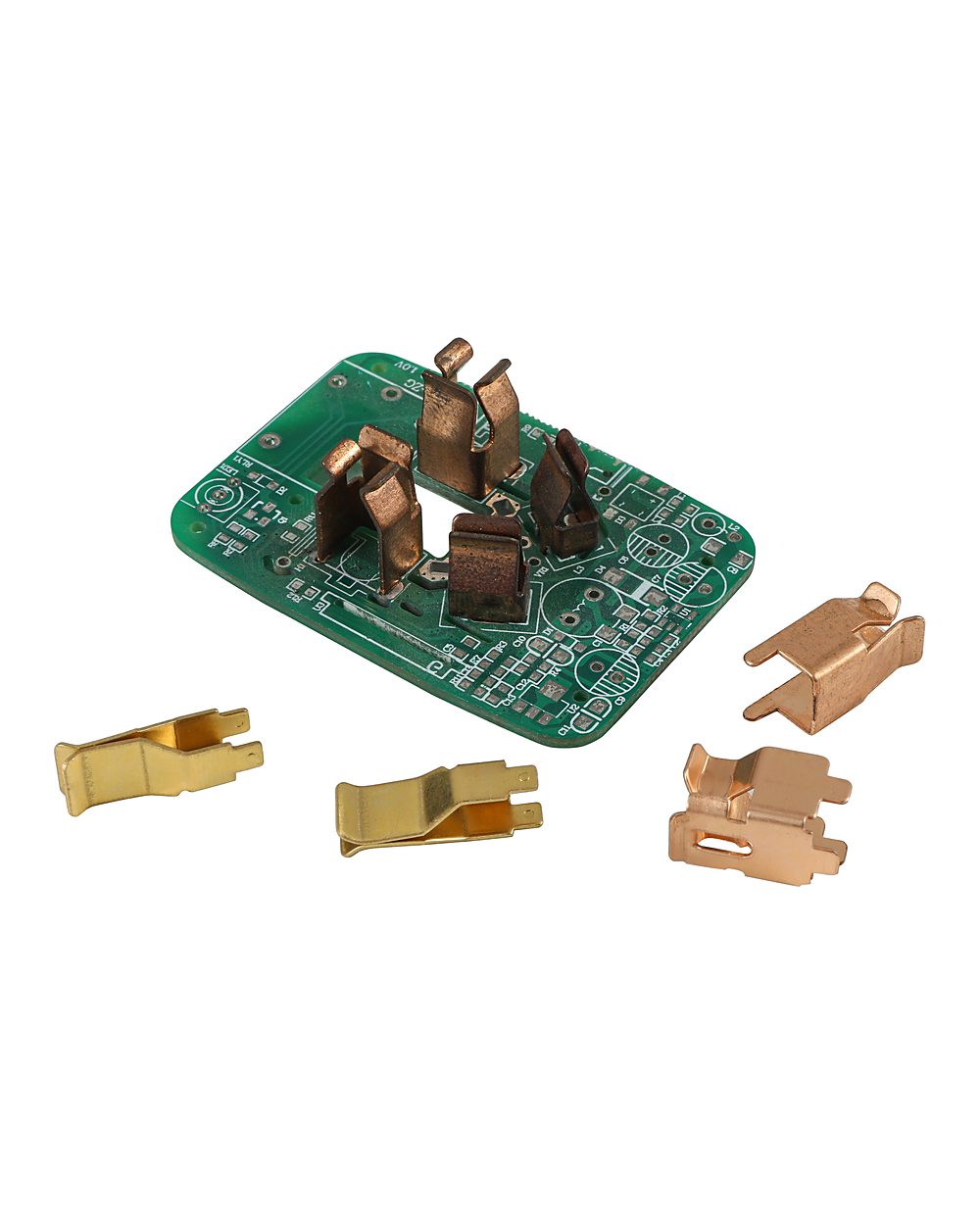
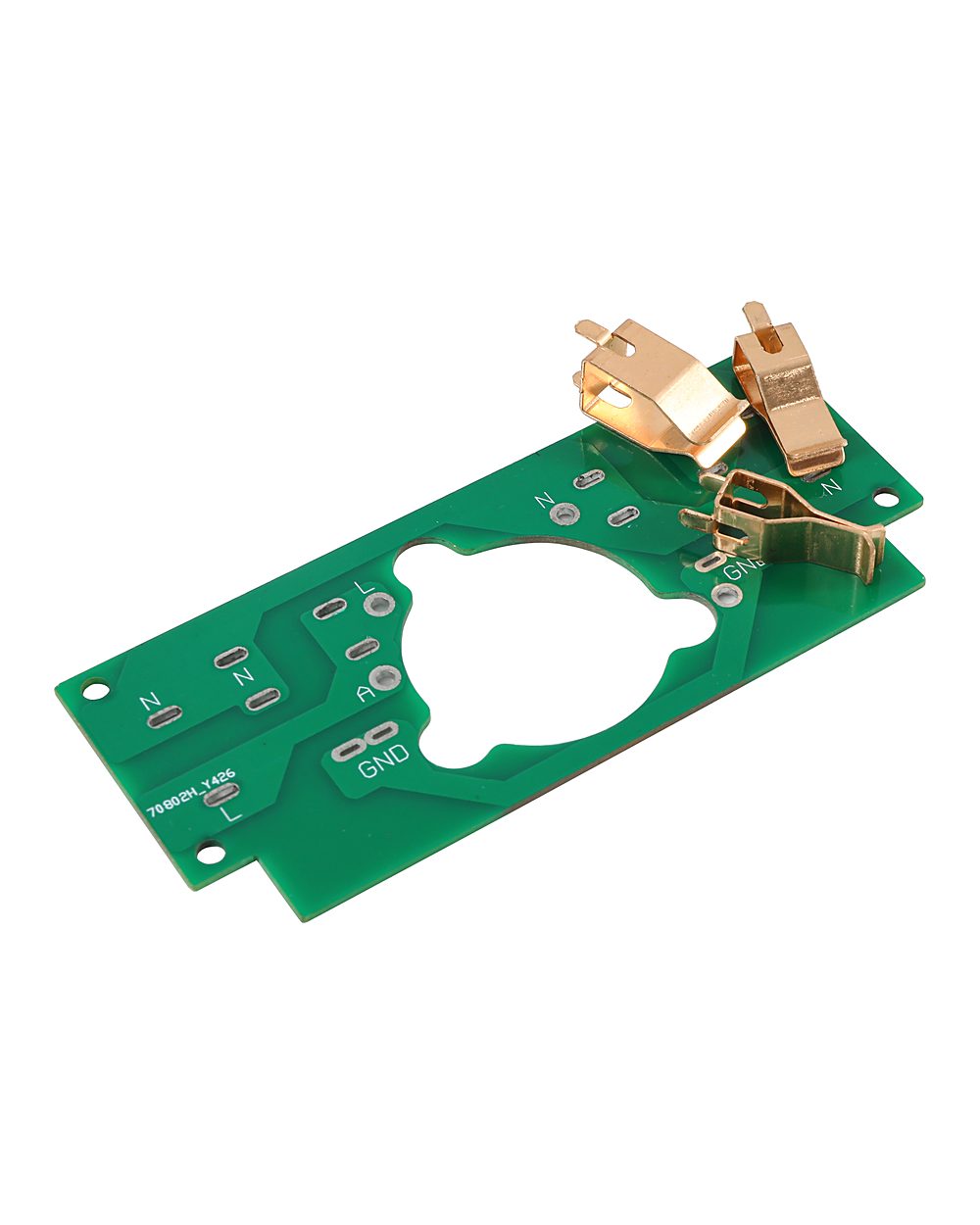
A smart socket uses more small conductive parts than its plain equivalent, and several of them share the same housing. These are the ones we make.
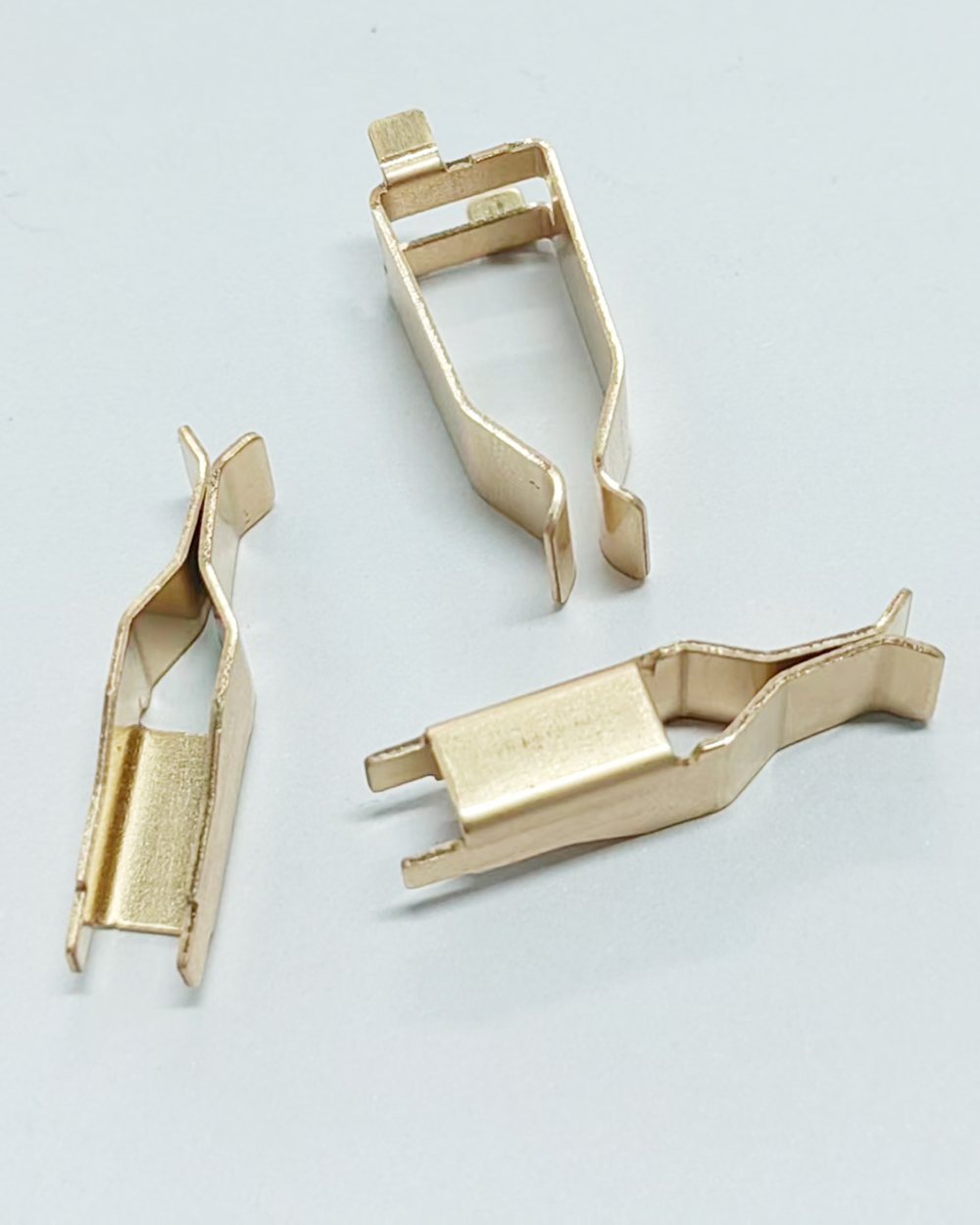
Outlet contacts
- Live, neutral and earth contact clips
- Multi-standard inserts where one outlet has to accept several plug types
- Phosphor bronze for any contact that has to keep its grip
Relay and module connections
- Relay and PCB terminals, solder tabs and pin headers
- Contact pins that press into the board or are reflow-soldered
- Plating chosen for the joint: tin for solder, nickel for wear
Busbars and earth
- Bridging plates and jumper strips that tie the poles together
- Earth clips, side-earthing clips and grounding brackets
- Hole position and flatness measured and reported per batch
What is different here
More current through less metal
A smart socket puts a relay, a metering circuit and USB charging into a housing that was designed for three contacts and a length of wire. Four things follow from that, and all four are decided at the stamping stage rather than afterwards.
- Cross-section. The same current now passes through narrower parts and through joints, so the strip thickness and the width of each conductor are calculated, not guessed.
- Build tolerance. The module and the brass have to fit the same housing. A hole that is 0.2 mm out is a rejected assembly line, so the critical dimensions are agreed in advance and measured per batch.
- Plating. Tin where the part is soldered, nickel where it wipes or wears. The plating is part of the drawing, not an afterthought.
- Heat. Relay and charging circuits warm the contacts. Phosphor bronze holds its spring pressure better than brass when the temperature cycles.
To quote
What we need from you
Four things are enough for a price and a manufacturability note within 24 hours on business days.
- Drawing or photo — 2D (PDF / DXF) or 3D (STEP), or a clear photo of the part you use now, with a ruler in frame
- Material and finish — H62, H65, phosphor bronze, and the plating if there is one
- Quantity — trial quantity and expected annual volume
- Destination market — so we quote the right Incoterm and the right packing
Also in the range
The other two lines
The same factory and the same brass, grouped by the product it goes into.
- Power strip accessories — clips, busbars and pins with the housing, hardware and cable
- Lamp holder & sensor parts — screw-shell contacts, spring contacts and crimped lead-wire terminals
- All six families of brass parts — terminals, inserts, grounding, connection plates, pins and bushes, and custom work
Working from a drawing that is not covered here? Send it — if it is a stamped brass part inside a socket, a switch panel or a small appliance, it is probably in range.